About the Project

KYTC’s BIL-Compliant TAMP.
Project Details
Duration
2017 to 2023
Services
Transportation Asset Management
Tasks
- 2018 and 2022 TAMPs for certification by FHWA
- 10-year financial plans that detail planned investments in pavements and bridges
- Meeting facilitation
- Pavement and bridge life-cycle analyses
- Asset Management Implementation Roadmap
- Executive workshops
Project Experts
- Principal-In-Charge and Project Manager: Katie Zimmerman, P.E.
- Lead Engineer: Brad Allen, P.E.
APTech was selected to develop the initial 2018 Transportation Asset Management Plan (TAMP) for the Kentucky Transportation Cabinet (KYTC). In 2021, KYTC modified its contract so that APTech could further assist with the development of the agency’s 2022 TAMP update. These TAMPs are required by the Federal Highway Administration and must be updated at least every four years.
Both TAMPs documented the Cabinet’s practices for managing the state-maintained pavements and bridges. Through the process of developing the TAMPs, APTech assisted the KYTC with the development of 10-year financial plans and investment strategies that considered both risks and life cycle plan (LCP) strategies. The 2022 TAMP update incorporated KYTC’s efforts to build a resilient transportation system into its investment strategies.
The KYTC TAMP reflects the agency’s strong commitment to optimized preservation strategies that keep assets in Good condition while those in Fair condition are either improved or preserved so they do not drop into a Poor condition. While this investment strategy makes the most of available funding, the KYTC TAMP demonstrates the need for additional funding to achieve its desired state of good repair. Each TAMP serves as effective communication tool by documenting the level of funding needed and forecasting expected condition gaps if the additional funding is not obtained.
To support the implementation of asset management throughout the Cabinet, APTech provided a roadmap that outlined suggested technical, organizational, workforce development, and policy initiatives in 2018. The APTech team also facilitated a workshop for executive leadership to promote a sustainable, asset management program.

In 2021, the North Dakota DOT (NDDOT) contracted with Applied Pavement Technology, Inc. (APTech) to update and implement its federally compliant risk-based transportation asset management plan. The plan documents NDDOT’s practices and planned investments for managing the agency’s over 17,400 lane-miles of pavement and more than 2,300 highway bridges from 2022 through 2031. NDDOT was looking for a firm that could help them streamline their Transportation Asset Management Plan (TAMP) and better connect it to its family of plans while identifying opportunities to improve asset management and capital programming processes. NDDOT is striving to develop an engaging and highly graphical TAMP that complies with Federal requirements in forty pages or less.
“NDDOT challenged us with creating a visually appealing TAMP that is less than half as long as most TAMPs. This caused us to rethink how the TAMP is organized and how required information is presented.”
— Brad Allen, P.E. • Project Manager
APTech is leading all aspects of the TAMP development, including the documentation of existing asset management processes, financial planning, life cycle planning, and risk analysis. In developing the TAMP, APTech conducted an innovative gap analysis based on future scenarios established in the NDDOT long range statewide transportation plan, Transportation Connection. These scenarios, titled Urban Centers, Rural Renaissance, Smart and Connected, and Ghost Towns, identified possible economic futures for the state. APTech developed a gap analysis that forecasted pavement and bridge conditions under each of these scenarios and compared those to forecasts based on each alternate scenario. The results are presented in the TAMP with a 2-page infographic.
As part of the TAMP update, APTech is supporting NDDOT with internal and external stakeholder outreach to map current program development processes. This involves engagement with a broad group of internal and external stakeholders including local Federal Highway Administration (FHWA) Division partners early in the TAMP development process. APTech facilitated a series of workshops and interviews with stakeholders to develop detailed process maps and identified risks and inefficiencies in current processes. Working with NDDOT Asset Management staff, APTech developed recommendations for improvements to existing business processes that led to more effective long-term investment decisions for the NDDOT. Following certification of the TAMP, APTech will work with NDDOT to implement selected improvements.
The project demonstrates the team’s ability to develop implementation guidance to support the successful transition to a risk-based, strategic approach to managing transportation assets that leverages available tools and technology. The North Dakota TAMP update does not involve services related to transportation performance management (TPM)
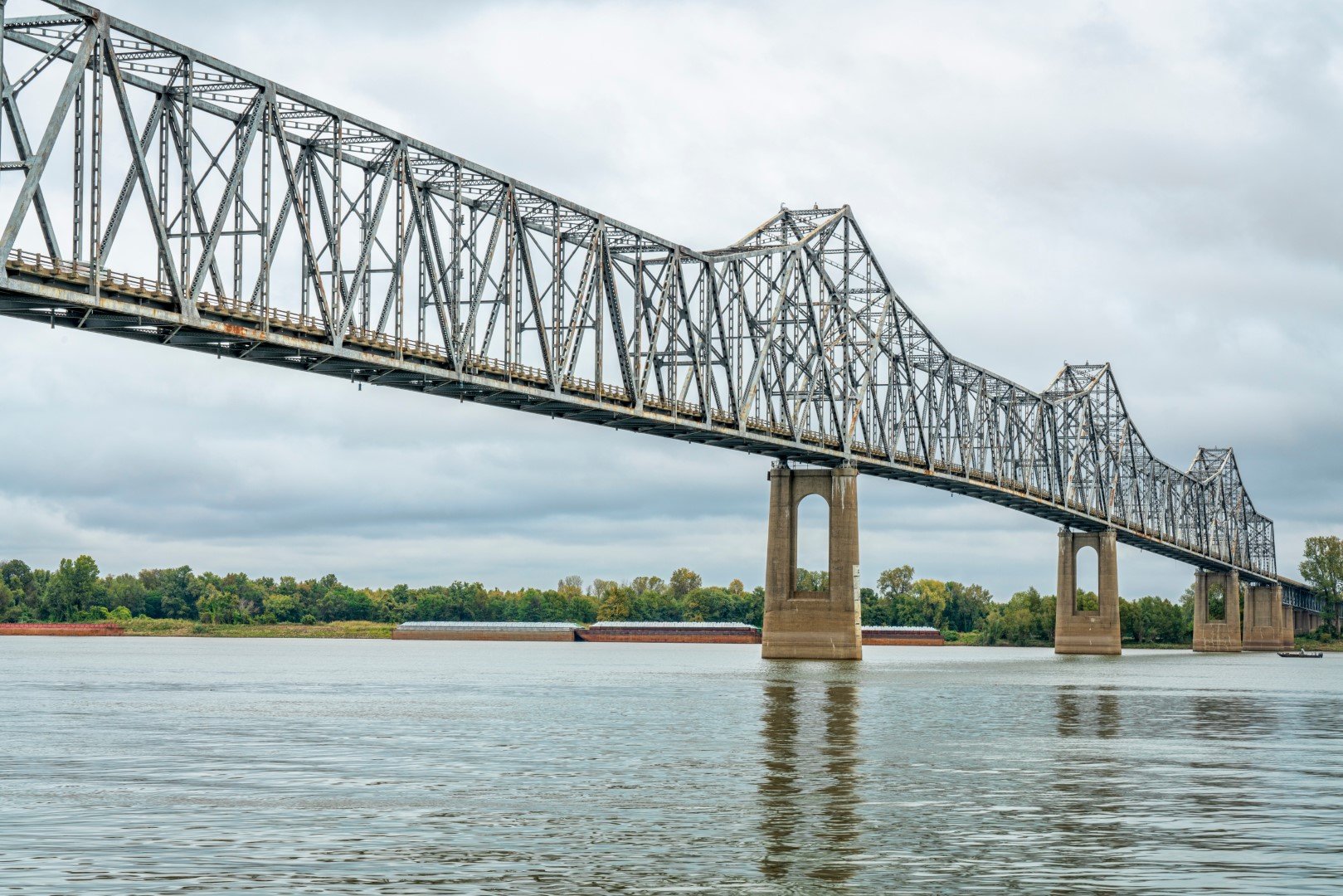
APTech was selected to develop the initial 2018 Transportation Asset Management Plan (TAMP) for the Kentucky Transportation Cabinet (KYTC). In 2021, KYTC modified its contract so that APTech could further assist with the development of the agency’s 2022 TAMP update. These TAMPs are required by the Federal Highway Administration and must be updated at least every four years.
Both TAMPs documented the Cabinet’s practices for managing the state-maintained pavements and bridges. Through the process of developing the TAMPs, APTech assisted the KYTC with the development of 10-year financial plans and investment strategies that considered both risks and life cycle plan (LCP) strategies. The 2022 TAMP update incorporated KYTC’s efforts to build a resilient transportation system into its investment strategies.
The KYTC TAMP reflects the agency’s strong commitment to optimized preservation strategies that keep assets in Good condition while those in Fair condition are either improved or preserved so they do not drop into a Poor condition. While this investment strategy makes the most of available funding, the KYTC TAMP demonstrates the need for additional funding to achieve its desired state of good repair. Each TAMP serves as effective communication tool by documenting the level of funding needed and forecasting expected condition gaps if the additional funding is not obtained.
To support the implementation of asset management throughout the Cabinet, APTech provided a roadmap that outlined suggested technical, organizational, workforce development, and policy initiatives in 2018. The APTech team also facilitated a workshop for executive leadership to promote a sustainable, asset management program.

Ohio DOT is responsible for managing a transportation network with a capital program in excess of $2 billion. In response to 2012’s “Moving Ahead for Progress in the 21st Century Act” (MAP-21) and to better manage its sizable obligations, the Department sought to implement improved business processes to support its asset management activities and develop a Transportation Asset Management Plan (TAMP). To accomplish this goal, the Ohio DOT selected Applied Pavement Technology, Inc. (APTech) to develop its 2018 long-term, risk-based TAMP and to provide recommendations for changes to existing practices to support the implementation of the TAMP.
During this project, APTech developed a customized TAMP that describes the processes used to manage the state-maintained pavements, bridges, and culverts and establishes an investment strategy that makes the best use of available funding. In addition, APTech helped identify improvements to existing business processes that would lead to more effective long-term investment decisions for the Ohio DOT. Finally, workshops were facilitated with the Ohio DOT personnel to support workforce development efforts needed to implement the new business processes.
This TAMP is used in systematic and strategic investment decisions that use funds more effectively and support the Ohio DOT’s mission to: take care of what they have, make the system work better, improve safety, and enhance capacity.
The project demonstrates the team’s ability to develop implementation guidance that led to the successful transition to a risk-based, strategic approach to managing transportation assets that leverages available tools and technology.

The Mississippi DOT selected APTech to update the existing pavement management process documentation, develop a Quality Management Plan (QMP) for pavement management data collection activities, and provide recommendations for improving quality checks on pavement condition data collected by vendors.
Our work:
Reviewed the Department's existing pavement management policies and interviewing staff members.
Conducted a thorough literature review of QMPs from other agencies to develop a comprehensive Pavement Management Manual.
Developed a QMP to guide the collection of pavement condition data using both automated and manual techniques and to satisfy the requirements under the MAP-21 Act for data quality.
Developed a Technical Brief to summarize the content found in the Pavement Management Manual and the QMP as part of the Department's outreach opportunities.

In 2012, federal highway legislation commonly known as the “Moving Ahead for Progress in the 21st Century Act,” or MAP-21, was enacted to provide funding for transportation programs and establish a performance-based Federal highway program. The legislation included a requirement for States to develop “a risk-based asset management plan for the National Highway System to improve or preserve the condition of the assets and the performance of the system.” The Nevada Department of Transportation (NDOT) set out to develop a transportation asset management plan (TAMP) that both meets the MAP-21 requirements and establishes a framework for developing future plans. To accomplish this goal, the Nevada DOT selected us to develop a long-term, risk-based TAMP.
Our work included:
Evaluating the data availability and maturity for twenty-five different transportation assets managed by the Nevada DOT.
Conducting interviews with agency personnel and analyzed the resulting data with respect to its contribution to developing the TAMP.
Developing a rating process to consider factors such as the availability of inventory information, the existence of performance targets, the availability of deterioration rates, and the sophistication of financial analysis tool. The ratings were used to assign an overall level of maturity to each asset type.
Establishing a prioritization process to develop recommendations for which assets to include in the initial TAMP.
Developing a TAMP that includes pavement, bridge, and ITS assets.
The TAMP was designed to summarize inventory and condition information, to establish performance targets to be met, and to develop investment strategies that demonstrate a data-driven, cost-effective approach to maintaining and preserving transportation assets for 10 years. In addition, the steps involved in developing the TAMP were documented so they will serve as a resource for future updates to the TAMP.

The use of asset management principles in state highway agencies (SHAs) has become increasingly important as those agencies respond to increasing demands on the highway system and demands for improved transparency and accountability in agency decisions. Asset management provides a framework for using performance data to make sound investment decisions that are aligned with the agency’s strategic objectives.
To help identify and prioritize changes that are needed to support asset management in a transportation agency, the American Association of State Highway and Transportation Officials (AASHTO) published the Transportation Asset Management Guide - A Focus on Implementation. The Guide describes the use of a gap analysis as an objective and structured process for evaluating current and desired asset management practices and to identify priorities for actions that are needed to achieve agency goals.
When the Guide was developed, a prototype of a tool was developed to support the use of a gap analysis by SHAs. However, the original tool was developed based on experience in New Zealand rather than the U.S. and was not easily modifiable. To remedy these difficulties, the National Cooperative Research Program (NCHRP) selected APTech to develop a new gap analysis tool that is more intuitive, well described, user-friendly, and applicable for transportation practitioners and decision-makers in the United States.
To determine the capabilities needed in the improved tool, we are conducted a literature and process review. The data from these activities enabled us to develop helpful guidelines for conducting a gap analysis and an intuitive and user-friendly gap analysis spreadsheet tool that is relevant to transportation asset management in the United States. The gap analysis spreadsheet tool will be made available to SHAs through AASHTO and outreach activities such as webinars and workshops. National Highway Institute courses will also be used to promote the tool’s use.